

It All Starts With One
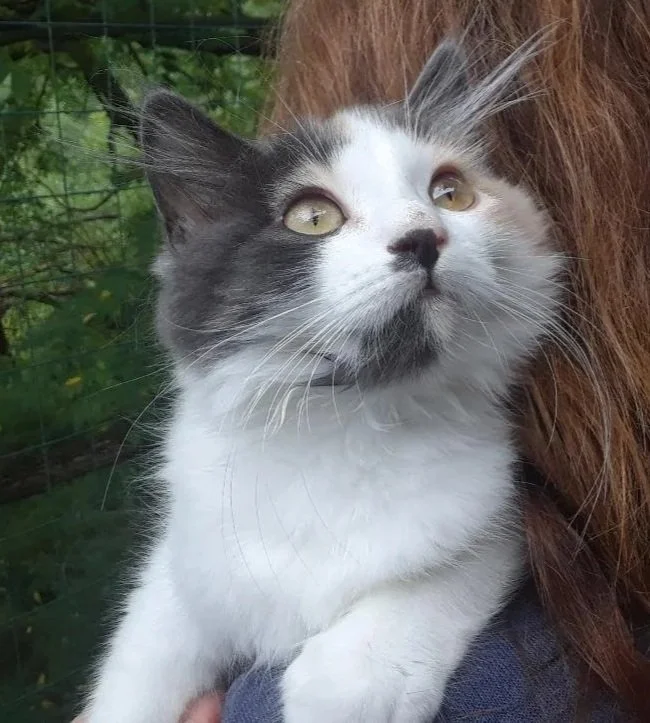
Exponential growth is neither good nor bad — it's just math. But what you let it multiply makes all the difference.
We tend to think of big problems as requiring big solutions, and small gestures as staying small. But nature, and math, beg to differ. Whether something grows into a crisis or a blessing depends far less on how it starts than on what you allow to keep going.
Consider two scenarios. One involves an unspayed cat or dog. The other involves a single penny donated per can of pet food. Both start with "just one." What happens next couldn't be more different.
Working against you: the math of overpopulation
A single unspayed female cat can go into heat as early as four months old and produce two to three litters per year. Each litter averages four to six kittens. Those kittens mature in months and begin reproducing themselves. Within seven years, that one cat and her descendants can theoretically produce over 370,000 cats.
370,000+ cats from one unspayed female in 7 years (theoretical)
For dogs, the numbers are similarly staggering. One unspayed female and her offspring can produce over 67,000 dogs in six years. These aren't just statistics — they represent animals in shelters, animals on the streets, and animals euthanized simply because there aren't enough homes.
Cats
370,000
Offspring possible from 1 unspayed female cat over 7 years
Dogs
67,000
Offspring possible from 1 unspayed female dog over 6 years
The tragedy is that none of this requires neglect or cruelty to begin. It only requires inaction. One pet left unspayed. One litter not addressed. One generation allowed to compound into the next. The math does the rest; relentlessly, automatically, and without concern for outcomes.
The uncomfortable truth
"An estimated 6–8 million animals enter U.S. shelters each year. About half will never make it out alive."
Spaying or neutering one pet doesn't feel heroic. It's quiet, routine, and the results are invisible because what you're preventing simply never happens. But that invisible chain of animals that never suffered, never starved, never sat in a cage waiting. That is the real impact of one small act taken at the right time.

Working for you: the math of a penny
Now flip the equation. What if something small was working for good instead of against it?
Imagine a pet food brand commits to donating just one cent for every can of dog or cat food sold. One penny. The kind you find on the sidewalk and don't bother to pick up.
$10,000 from just 1,000,000 cans at one penny each
Americans buy roughly 4 billion cans of canned pet food each year. At one cent per can, that's $40 million annually. Enough to fund thousands of spay/neuter surgeries and support rescue organizations across the country. One penny per can. Not a grand gesture. Not a gala fundraiser. Just a small, repeating number applied consistently across a large base.
Per can
$0.01
So small it's nearly invisible on any household budget
At scale
$40M+
If every canned pet food can sold annually contributed one cent.
Small numbers, repeated at scale, are not small at all.
Same force. Opposite direction.
Here's the thing that connects both of these stories: the math is identical. Exponential and compounding growth don't care about intentions. They multiply what you give them.
Give it inaction around an unspayed pet, and it multiplies suffering. Give it a consistent small contribution toward animal welfare, and it multiplies good. The mechanism is the same. Only the input — and the outcome — differs.
The point
"It doesn't start with thousands of animals or thousands of dollars. It starts with one decision, made once, by one person."
So far, private donors have carried this work. People giving what they can, when they can, because they believe it matters. And it has made a real difference. But individual generosity can only stretch so far — what this needs now is the right partner, and the right person, willing to say yes.
Picture the same penny-per-can math, applied to everyday people instead of cans. If just one person donated a single penny every day, that's $3.65 a year — almost nothing. But if 10,000 people did the same, that's $36,500 a year. And the more people who join in, the faster that number grows — without anyone feeling it in their wallet.
1 person
$3.65
per year, at 1¢ a day
1,000 people
$3,650
per year, at 1¢ a day each
10,000 people
$36,500
per year, at 1¢ a day each
That's the case we're making. Not for a windfall, and not for a miracle. Just for one yes, from the right person, willing to let a penny do what pennies do best: add up
The question isn't whether small things matter. They always do. The question is simply: what are you letting compound?
