

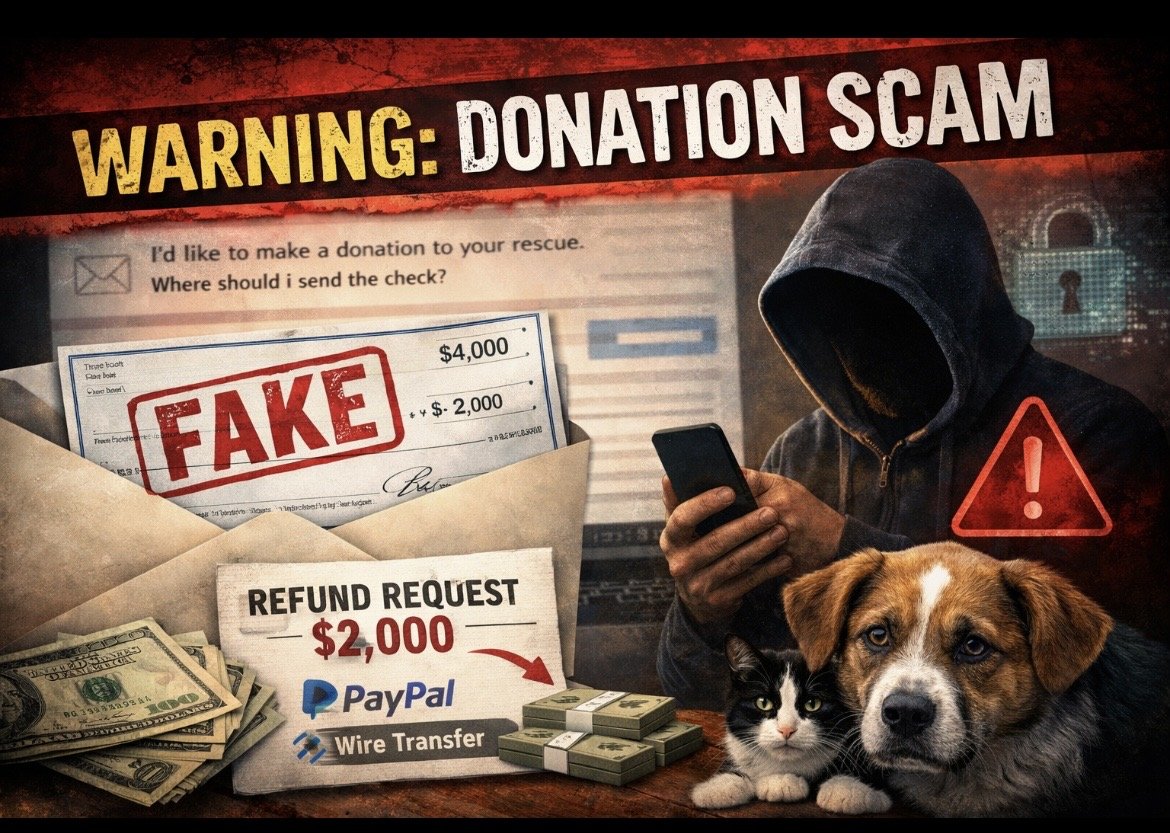
Imagine opening your email one morning and finding a message from someone who says they recently heard about your organization through a friend.
They tell you they admire the work you’re doing for animals. They explain that they’ve decided to support your rescue this year and would like to send a donation. All they need to know is where to mail the check.
For most animal nonprofits, this kind of email is wonderful news. Donations keep rescues running. They fund food, medical care, and lifesaving programs.
So the organization responds with their mailing address.
A few days later, a check arrives.
The donor had mentioned they planned to send $2,000—a generous gift that could help many animals. But when the envelope is opened, the check is actually for $4,000.
Surprised but grateful, the organization deposits the check and sends a heartfelt thank-you email on Sunday.
Monday morning, the donor replies asking if the check has arrived yet. The rescue responds right away, forwarding their thank-you message and letting him know the receipt is already in the mail.
He acknowledges the email.
Everything seems normal.
Then Tuesday morning another message arrives asking again if the check has been received.
The organization begins to feel uneasy.
By Wednesday morning, the real problem appears.
The donor writes again—this time urgently explaining that his financial person accidentally sent $4,000 instead of $2,000. He says they need the extra $2,000 returned immediately and provides instructions to send the money through wire transfer or PayPal.
Thankfully, the organization paused.
Instead of sending money back, they went directly to their bank and explained the situation.
Soon after, a man contacted them saying someone had stolen his bank routing and account numbers and used them to create multiple fraudulent checks—with the scammer’s name printed on them, not his.
What looked like a generous donation was actually a well-designed scam.
If the rescue had sent the $2,000 refund, they would have lost that money once the original check was discovered to be fake.
Fortunately, they recognized the warning signs in time.
But what makes this situation even more concerning is what happened next.
When the organization began sharing this experience with other rescues and animal nonprofits in their area, they discovered something troubling:
Other organizations had started receiving very similar emails.
Why This Scam Is So Concerning
What makes this type of scam particularly dangerous is that the messages don’t contain the obvious warning signs many of us were taught to watch for.
In the past, scam emails were often easy to identify. They might contain broken English, strange formatting, or unrealistic stories.
Today, that’s no longer the case.
Modern technology—including artificial intelligence (AI)—has made it possible for scammers to create messages that look incredibly real.
Here are some of the reasons these scams are becoming harder to detect:
The emails are well written
The message may read like it came from a thoughtful supporter. The sender might mention your mission, say they heard about your organization from a friend, and express genuine admiration for the work you do. The tone can sound sincere, friendly, and supportive—exactly what you would expect from someone who truly wants to help animals.
The grammar and spelling are perfect
In the past, poor grammar was often a red flag. But with AI writing tools available today, someone doesn’t even need to speak English to send a perfectly written message. A scammer can simply ask an AI program to draft a professional email expressing interest in donating to an animal rescue, and the result can sound completely authentic.
The story sounds believable
Scammers often create simple, realistic explanations—such as hearing about your organization from a friend, choosing a different charity to support each year, or wanting to make a meaningful contribution to animal welfare. These stories are intentionally designed to sound reasonable and relatable so they don’t raise suspicion.
The email addresses look normal and legitimate
The sender’s email address may appear completely ordinary. It might use a common email provider and include what looks like a real name. There are often no obvious signs that the address was created solely for fraudulent activity.
The sender’s profile may look real
Many email accounts now include a contact photo or profile image. Scammers can easily add a photo to make the account seem more legitimate. These images may be taken from social media, stock photo sites, or even generated entirely by AI. At a glance, it can look like a real person reaching out.
Taken together, these details can make a scam feel very convincing.
With today’s tools, scammers can create emails and identities that appear professional, believable, and trustworthy—making it much harder for busy nonprofits to spot the warning signs.
What Every Nonprofit Should Know
If your organization receives a donation that feels even slightly questionable, remember these important safeguards:
Never refund money immediately
Even if the sender sounds urgent, do not return funds right away. Checks can take time to fully clear, and a bank initially accepting a deposit does not mean the check is legitimate.
Talk to your bank first
If you have any doubt at all, take the check to your bank and explain the situation. Banks can often verify whether a check is fraudulent before it ever touches your account if you ask them to review it.
Avoid sending refunds electronically
Never send a refund using your own check, wire transfer, PayPal, or other electronic methods when something seems suspicious. These methods expose financial information and allow scammers to quickly move stolen funds.
If a refund truly becomes necessary, a money order is a much safer option because it does not reveal your banking details.
Be cautious of urgency
Scammers rely on pressure. When someone insists money must be returned immediately, that is often the biggest warning sign.
If You Receive a Scam Attempt, Report It
If your organization receives suspicious emails, phone calls, checks, or donation requests, don’t just ignore them—report them.
Reporting these attempts helps authorities track fraud patterns and prevent other nonprofits from becoming victims.
You can report scams in several ways:
Contact your local police department and file a report.
Submit a report to the FBI Internet Crime Complaint Center:
www.ic3.govReport the scam to the Federal Trade Commission:
reportfraud.ftc.gov
Even if no money was lost, reporting the attempt helps investigators identify and stop these scams.
Protecting the Animal Welfare Community
Animal rescues and nonprofits work tirelessly to help animals in need. Unfortunately, scammers know that these organizations rely on donations and often operate with small teams and limited resources.
That makes them a target.
By sharing this story, we hope to help other groups recognize this scam before it costs them money that should be going toward saving lives.
If you run or work with a nonprofit, please consider sharing this information with your team and with other organizations in your network.
The more people who are aware, the harder it becomes for scammers to succeed.
And together, we can keep our resources focused where they belong—helping dogs and cats who depend on us.
