

You Can’t Starve Away a Population Problem
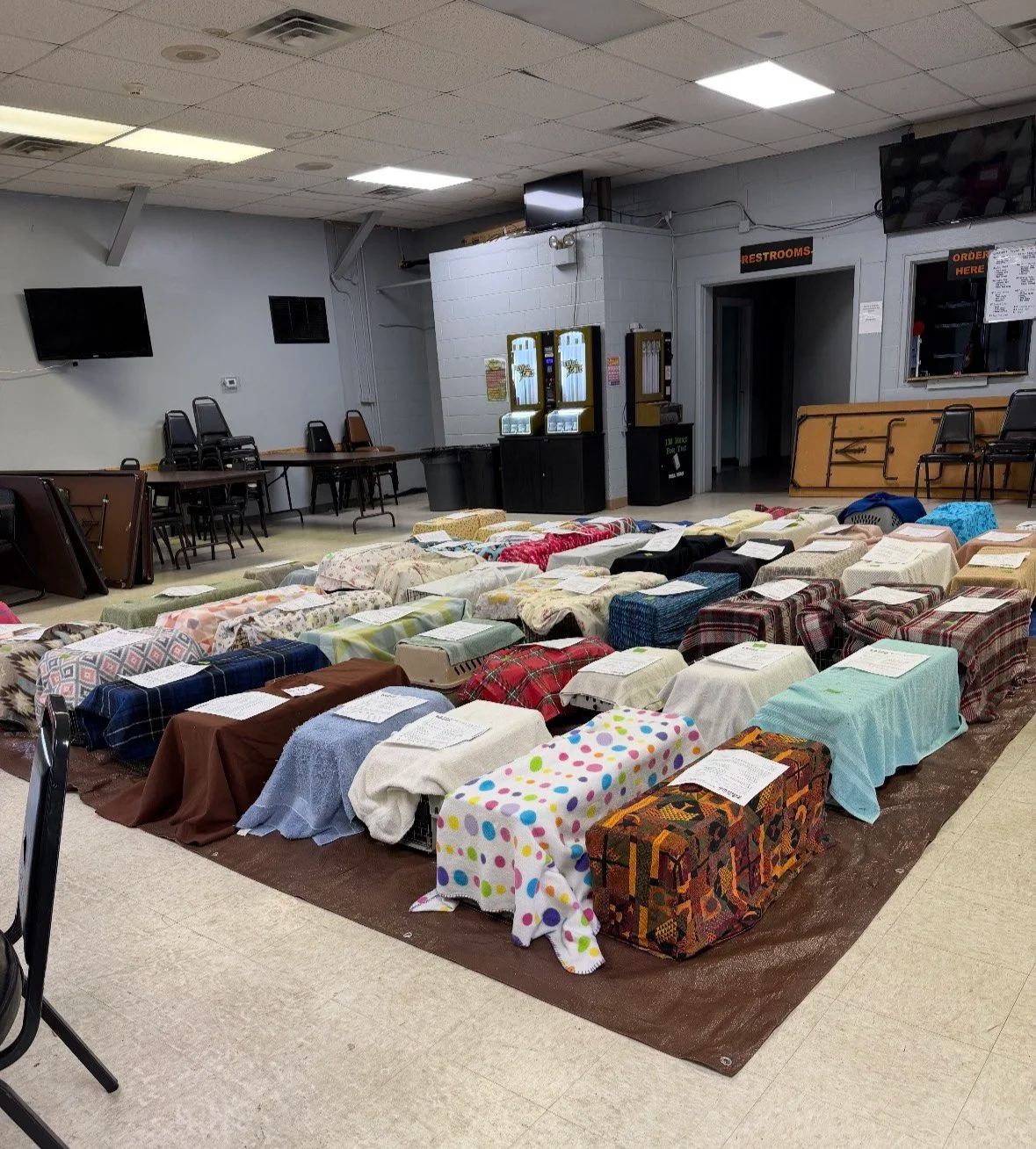
When communities become frustrated with free-roaming cats, two things often happen.
Someone says, “Stop feeding them.”
And somewhere else, an unaltered pet is having another litter.
Those two things may seem unrelated, but they aren’t.
If we truly want fewer homeless dogs and cats, our policies need to address where additional animals are coming from, not simply make life harder for the animals already here.
Feeding Them Is Not What Makes Them Reproduce
Feeding bans can sound logical at first: Stop feeding the cats, and eventually the cats will leave.
But before we make hunger the strategy, we should ask ourselves a very simple question:
Does anyone really want to look out their window and watch a hungry, sick animal slowly starve simply because someone has been forbidden to feed it?
A feeding ban doesn’t make the cats disappear overnight. It simply takes food away from animals that are already there.
Community cats are strongly connected to the areas they know. When a regular food source disappears, hungry cats may search farther for food, including around dumpsters, garbage cans, businesses and neighboring properties.
Meanwhile, one very important thing has not changed:
An unaltered cat can still reproduce.
A feeding ban does not spay a single female. It does not neuter a single male. It does not prevent the next litter.
And it can discourage the very people who are trying to manage these cats from helping them.
Responsible Feeding Is Different From Simply Putting Out Food
PennyFix isn’t advocating for dumping bowls of food outside and walking away.
Responsible community-cat care means much more than feeding.
Ideally, caregivers should be working toward Trap-Neuter-Return (TNR), monitoring the cats, identifying newcomers, providing fresh water, keeping feeding areas clean and removing leftover food rather than allowing it to sit out and attract wildlife or create a nuisance.
The goal isn’t to feed more cats.
The goal is to manage the cats who are already there while stopping reproduction.
That’s an enormous difference.
A person who knows where a colony eats also knows where those cats gather. That makes it possible to monitor them and, critically, trap them for spay/neuter.
Take away organized feeding without addressing reproduction, and you haven’t solved the problem. You’ve simply taken away one of the tools being used to manage it.
A Sterilized Colony Can Help Stabilize the Area
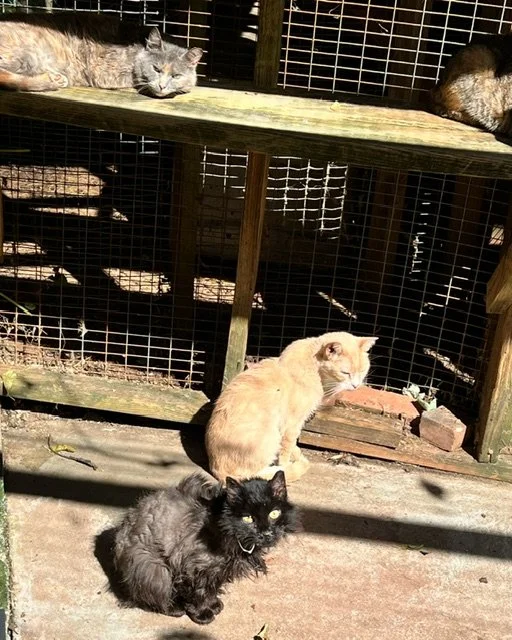
There’s another important piece of community-cat management that is easy to overlook: cats occupy territory.
When an established group of cats is spayed or neutered and returned to the area, those cats remain in their familiar territory, but they are no longer producing kittens. With effective TNR and continued monitoring, the colony can stabilize and gradually decrease over time.
Simply removing cats doesn’t necessarily solve the problem. If the things that attracted cats to that location in the first place, such as food, water and shelter, remain available, other cats can eventually move into the area. If those newcomers are not sterilized, reproduction begins all over again.
TNR takes a different approach:
Keep the established cats. Stop the breeding. Monitor for newcomers. Sterilize new cats that arrive.
Instead of an uncontrolled cycle of reproduction, you now have a managed colony that is no longer continually producing kittens.
Cats can also influence the behavior of rodents and other small prey simply through their presence. They shouldn’t be considered a replacement for proper pest-control measures, especially for large urban rat populations, but removing an established colony doesn’t guarantee that rodents disappear or that the area remains cat-free.
So when we talk about removing community cats, we should also ask:
What happens after they’re gone?
If food, shelter and other resources remain, that attractive piece of real estate may not remain vacant for long.
A healthy, sterilized and responsibly managed colony can be far more predictable than an endless cycle of removing cats, having new cats arrive and then watching another generation of kittens be born.
But There’s Another Door Animals Are Coming Through
Community cats don’t appear out of thin air.
Some are born outside. Some were once someone’s pets. Some are abandoned. And some populations grow because owned, unaltered animals reproduce.
That means communities serious about reducing homeless-animal populations also need to look at housing policies.
Pet-friendly rental housing is incredibly important. People should not have to surrender beloved pets simply because they need somewhere to live.
But pet-friendly housing can also become part of the solution to animal overpopulation.
Property owners and managers can establish responsible pet policies that strongly encourage or, where legally appropriate, require resident dogs and cats to be spayed or neutered, with reasonable exceptions for medical circumstances and consideration when surgery is temporarily inaccessible or unaffordable.
And that last part matters.
A requirement without access isn’t much of a solution.
Property managers can partner with local shelters, rescues, veterinary clinics and spay/neuter organizations to help residents find affordable services.
Imagine a rental community saying:
“Pets are welcome here, and we also want to help make responsible pet ownership accessible.”
That’s not anti-pet housing.
That’s pet-friendly housing helping prevent the next generation of homeless animals.
One Unaltered Pet Can Become a Community Problem
It doesn’t take much.
An indoor cat slips through a door.
A dog gets loose.
Someone allows an unaltered pet to roam.
A tenant moves and abandons an animal.
An accidental litter is born, and homes cannot be found for every puppy or kitten.
What began as one person’s unaltered pet can eventually become a problem shared by neighbors, animal control officers, shelters, rescues, municipalities and taxpayers.
That’s why prevention matters.
Spay/neuter isn’t only an animal-welfare issue.
It’s a community issue.
Preventing unintended litters means fewer animals entering already-strained shelters and rescues, fewer animals competing for available homes, and fewer animals potentially ending up homeless in the first place.
Stop Managing the Symptom. Start Addressing the Source.
If a community has a growing population of free-roaming cats, banning food may make it appear that something is being done.
But we need to ask a different question:
What will actually prevent more cats from being born into this situation?
Support TNR. Support responsible colony management. Make affordable spay/neuter accessible. Encourage landlords and property managers to make sterilization part of responsible pet policies while helping residents access affordable services. Educate pet owners. Work with shelters and rescues.
And when someone is responsibly caring for community cats, don’t automatically treat that person as the problem.
They may be one of the people trying hardest to solve it.
At PennyFix, our mission has always been rooted in a simple idea:
If we want fewer homeless animals tomorrow, we have to prevent unwanted litters today.
You cannot starve your way out of animal overpopulation.
You cannot shelter your way out of it.
You cannot rescue your way out of it.
But together, we can spay and neuter our way toward fewer animals ever needing rescue in the first place.
PennyFix raises funds and awards grants to nonprofit organizations so those organizations can provide spay/neuter surgeries and vaccinations for dogs and cats at no cost to the pet owner.
Because the most humane homeless animal is the one who is never homeless at all.
If you are dealing with a community that is proposing or has instituted a feeding ban, very respectfully go to your township/borough meeting and present them this article and any others that support your feeding of community cats.
